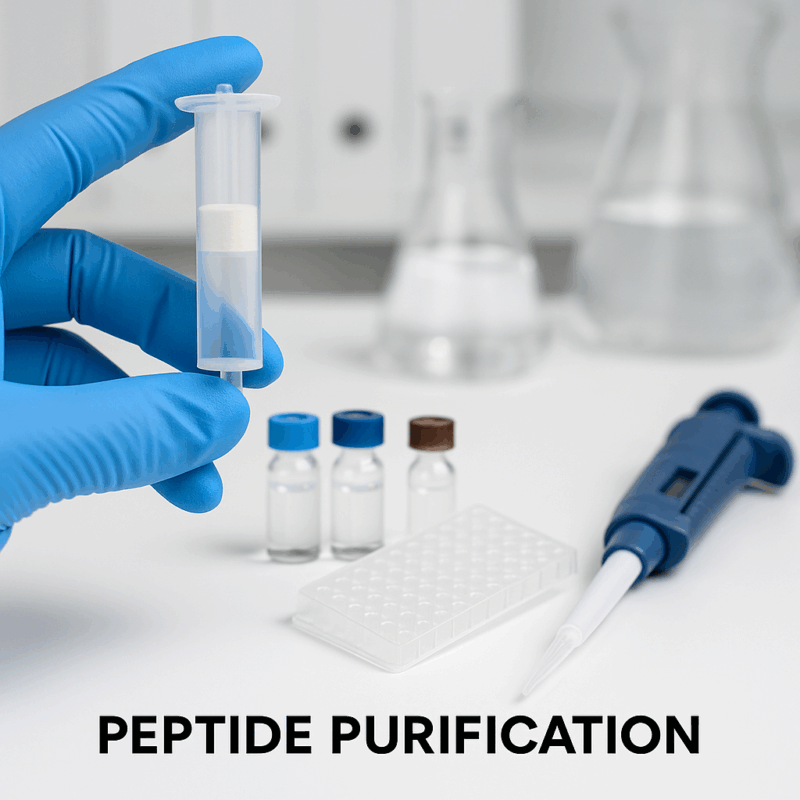
Peptide Security: Guidelines And Sops For Dealing With And Storage Space After reconstitution, because of the absence of preservatives, remedies ought to preferably be utilized within a short duration, typically within 24 to 72 hours under regulated conditions, and kept at 2 to 8 ° C. Always examine your reconstituted peptide before each use. An appropriately stored service needs to remain crystal clear and anemic. When flying, pack your peptides in a carry-on bag to stay clear of exposure to severe temperatures in inspected luggage. Peptides are admitted both carry-on and examined bags once correctly screened. Make use of an insulated, freezer-safe travel bag so you can refreeze cold pack during longer stopovers using flight terminal fridges freezer or bagged ice. This procedure, called lyophilization, preserves the three-dimensional structure that offers each peptide its biological activity. Prior to metrology of a peptide by AAA, there are preliminaryconsiderations and speculative optimizations that ought to be addressed to achieveaccuracy. Initially, the purity of the peptide must be examined (46 ). Particularly, it needs to be identified whether thepeptide contains any impurities that could add to amino acids, biasing thequantitative AAA.
What counteracts peptides?
Salicylic acid''s exfoliating activity might undercut the peptides, decreasing their skin-repairing benefits. Suggestion: To prevent any type of communication, use salicylic acid and peptide products at various times. For example, integrate salicylic acid in your early morning routine and peptides in your evening routine.
Specs For Production And Quality Control Of Peptides
To assist assist in precise and exact AAA measurements by serviceproviders, the area would substantially gain from a brand-new set of referral products forharmonization. The optimal peptide size to decrease additional structureand make certain full hydrolysis is deposits. For the hydrolysis action, a peptide remedy with a known concentrationshould be utilized as a trueness control. In the absence of an appropriate peptidesolution referral material, labs doing AAA must consider preparing anin-house peptide criterion. A suitable in-house peptide option standard can Pharma Grade Research Peptides beprepared from a high-purity peptide and be value-assigned making use of a dual isotopedilution LC-MS/MS method. Enough aliquots of the internal peptide standardshould be prepared and saved icy so that an aliquot will certainly be measured as atrueness control with every regular AAA measurement.
Reconstituted Peptide Storage
As mentioned above, AAA of pure peptide internalstandards and calibrators is crucial to the transferability of assays and aggregationof results among lab.
These unbelievable macromolecules act as the foundation for healthy proteins and are vital elements in various organic features like immunology, cell signalling, and catalytic task.
Scientific laboratories are far more likely to use purifiedproteins as inner criteria and in exterior calibration products.
Despite those considerations, peptide choice is an empirical exercise that balances suitable characteristics withpractical limitations. Sometimes, because of the series of the healthy protein ofinterest, it may be inevitable to consist of peptides that do not satisfy every one of theserecommended standards. Consequently these standards are just implied to be guidelines forpeptide option, and some leisure of the addition requirements may be required todevelop the MRM assay. As an example, it may be impossible to leave out all cysteine andmethionine residues. Peptide analytes can be chosen using MS-based proteomic data or predictionalgorithms (14-22). But it needs to be done very carefully and with the ideal preventative measures. Unopened, unpunctured peptide vials can commonly be saved at room temperature level for a minimal time, depending on the certain peptide. However, for long-term storage, a lot of peptides should be refrigerated between 36 ° F to 46 ° F( 2 ° C to 8 ° C). Once it's time to make use of the peptide, reconstitution is executed to bring back the peptide to a practical remedy